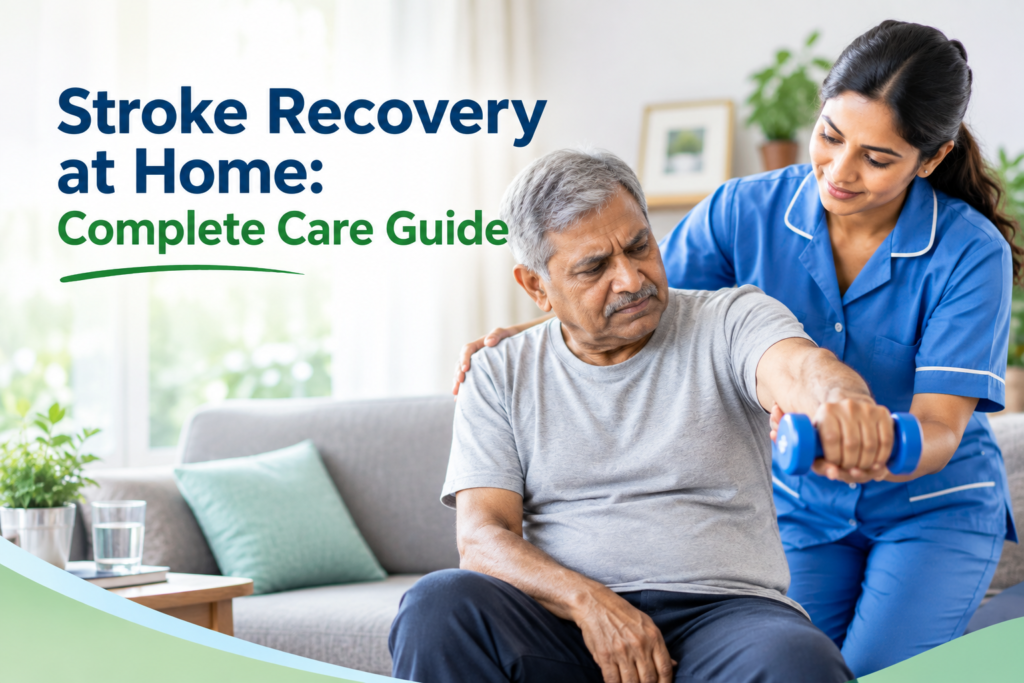
Good post stroke care involves much more than giving medicines. The patient may need help with several daily activities.
1. Give medicines on time
Give Medicines exactly as prescribed by the doctor. Do not stop, increase, decrease, or change medicines without medical advice.
A simple medicine chart can help caregivers remember the correct time and dose.
2. Encourage safe movement
Depending on the doctor’s and physiotherapist’s advice, the patient may need regular exercises.
Gentle movement can help improve strength, balance, flexibility, and daily functioning.
Never force the patient to perform an exercise that has not been recommended by the healthcare professional.
3. Support walking and transfers
A stroke patient may need help moving from the bed to a chair, standing, or walking.
Caregivers should learn the correct technique from a physiotherapist or healthcare professional rather than pulling the patient’s weak arm.
4. Pay attention to swallowing
Some stroke patients have difficulty swallowing. This can increase the risk of food or liquid entering the lungs.
If the patient coughs while eating, has a wet or unusual voice after drinking, or frequently chokes, inform the healthcare professional.
Follow the recommended food texture and feeding method.
5. Maintain personal hygiene
Some patients may need help with bathing, brushing teeth, changing clothes, using the toilet, and other personal activities.
Keeping the patient clean and comfortable can also help prevent skin problems and infections.
6. Prevent pressure sores
Patients who spend a lot of time in bed or a chair may develop pressure sores.
Caregivers should regularly check the skin, especially around areas such as the back, hips, heels, and elbows.
The healthcare team can guide the family on safe repositioning and pressure-relieving methods.