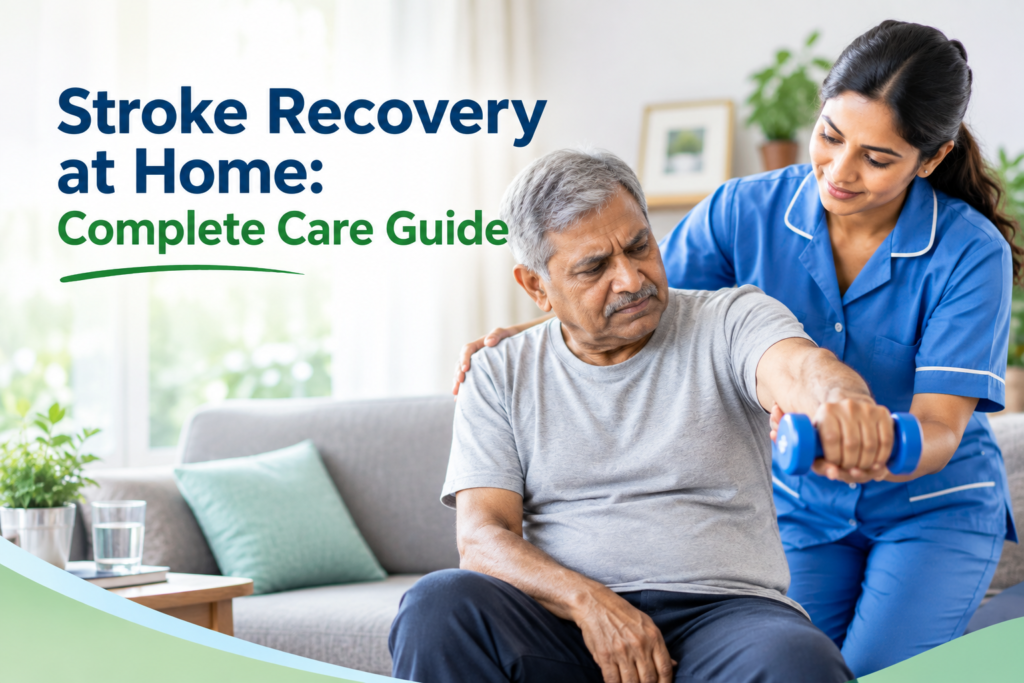
stroke recovery at home

Stroke Recovery at Home: Complete Care Guide

A stroke can bring sudden and major changes to a person’s daily life.  After a stroke, a person may have difficulty walking, speaking, eating, moving their hands or legs, or doing normal daily activities. Recovery takes time, patience, regular care, and support from family members and healthcare professionals.

Many families choose home recovery after a stroke because patients often feel safer and more comfortable in familiar surroundings.  However, caring for a stroke patient at home requires proper planning and attention.

This guide explains simple and practical ways to provide post-stroke care, what family members should know about nursing care of a stroke patient, and important things to remember when taking care stroke patient at home.

Key Takeaways

What Is a Stroke?

A stroke happens when the blood supply to part of the brain is blocked or when a blood vessel in the brain breaks. When the brain does not get enough oxygen and blood, brain cells can become damaged.

The impact of a stroke can vary from one person to another.  Some people may recover quickly, while others may need care for several months or longer.

Common problems after a stroke include:

  • Weakness or paralysis on one side of the body
  • Difficulty walking or standing
  • Trouble speaking or understanding speech
  • Difficulty swallowing
  • Poor balance
  • Memory problems
  • Changes in mood or behaviour
  • Difficulty doing daily activities
  • Tiredness and weakness

The doctor and rehabilitation team will decide the type of treatment and care the patient needs.

A Family Guide to Stroke Recovery at Home

Once the doctor says that the patient is ready to return home, the family should prepare the home before the patient arrives.

The main aim of stroke recovery at home is to help the patient become as independent and safe as possible.

Recovery may include:

  • Regular medicines as prescribed
  • Physiotherapy
  • Speech therapy
  • Occupational therapy
  • Proper food and hydration
  • Personal hygiene
  • Safe movement and walking
  • Emotional support
  • Regular medical check-ups

Recovery does not happen overnight. Small improvements are also important. A patient who can sit for a few more minutes, move a hand slightly better, or speak a new word is making progress.

Preparing the Home for a Stroke Patient

Safety is very important after a stroke because weakness and balance problems can increase the risk of falling. Before bringing the patient home, consider making these changes:

1. Keep the floor clear

Remove loose carpets, wires, boxes, and other objects that can cause the patient to fall.

2. Improve bathroom safety

Install support rails if needed. Keep the bathroom floor dry and use suitable anti-slip arrangements.

3. Arrange the bed properly

The bed should be easy for the patient and caregiver to access. Keep important items such as water, medicines, and a phone nearby.

4. Keep frequently used items within reach

The patient should not have to stretch or climb to reach things.

Post Stroke Care at Home

Good post stroke care involves much more than giving medicines. The patient may need help with several daily activities.

1. Give medicines on time

Give Medicines exactly as prescribed by the doctor. Do not stop, increase, decrease, or change medicines without medical advice.

A simple medicine chart can help caregivers remember the correct time and dose.

2. Encourage safe movement

Depending on the doctor’s and physiotherapist’s advice, the patient may need regular exercises.

Gentle movement can help improve strength, balance, flexibility, and daily functioning.

Never force the patient to perform an exercise that has not been recommended by the healthcare professional.

3. Support walking and transfers

A stroke patient may need help moving from the bed to a chair, standing, or walking.

Caregivers should learn the correct technique from a physiotherapist or healthcare professional rather than pulling the patient’s weak arm.

4. Pay attention to swallowing

Some stroke patients have difficulty swallowing. This can increase the risk of food or liquid entering the lungs.

If the patient coughs while eating, has a wet or unusual voice after drinking, or frequently chokes, inform the healthcare professional.

Follow the recommended food texture and feeding method.

5. Maintain personal hygiene

Some patients may need help with bathing, brushing teeth, changing clothes, using the toilet, and other personal activities.

Keeping the patient clean and comfortable can also help prevent skin problems and infections.

6. Prevent pressure sores

Patients who spend a lot of time in bed or a chair may develop pressure sores.

Caregivers should regularly check the skin, especially around areas such as the back, hips, heels, and elbows.

The healthcare team can guide the family on safe repositioning and pressure-relieving methods.

Nursing Care of a Stroke Patient

Nursing care of a stroke patient is important when the patient needs professional medical support at home.

A trained nurse or caregiver may assist with:

  • Monitoring the patient’s general condition
  • Giving medicines as prescribed
  • Supporting personal hygiene
  • Helping with feeding when appropriate
  • Monitoring blood pressure and other parameters when advised
  • Supporting mobility and daily activities
  • Maintaining cleanliness
  • Providing basic patient care
  • Observing changes in the patient’s condition
  • Communicating important changes to the family and healthcare team

The exact level of nursing care depends on the patient’s medical condition and the doctor’s recommendations.

For patients with more complex needs, families should discuss the required level of professional care with their doctor.

Taking Care of a Stroke Patient at Home

Taking care stroke patient home can feel difficult for a family, especially during the first few weeks.

The caregiver should create a simple daily routine.

For example:

Morning:

Medicine → personal hygiene → breakfast → recommended exercises → rest

Afternoon:

Lunch → medicines → therapy/exercises → rest → light activity

Evening:

Personal care → dinner → medicines → relaxation → sleep routine

The routine can be changed according to the patient’s condition and the advice of the healthcare team.

Keeping a daily record of medicines, meals, exercises, appointments, and important changes can also make caregiving easier.

Emotional Support Is Also Important

Stroke recovery is not only about physical health. Many patients may feel sad, frustrated, angry, worried, or dependent on others.

Family members should be patient and supportive.

Try to:

  • Listen to the patient.
  • Give them enough time to speak.
  • Encourage them to do safe activities independently.
  • Celebrate small improvements.
  • Avoid shouting or showing frustration.
  • Include them in family conversations.
  • Give them hope without making unrealistic promises.

A calm and positive home environment can make the recovery journey easier.

When Should You Seek Immediate Medical Help?

Families should know the warning signs of another stroke.

Seek emergency medical help immediately if the patient suddenly develops:

  • New weakness or numbness, especially on one side
  • New difficulty speaking or understanding
  • Sudden loss of vision
  • Sudden severe dizziness or difficulty walking
  • Sudden severe headache
  • Sudden confusion or unusual behaviour

Do not wait to see whether the symptoms improve. A suspected new stroke is a medical emergency.

Why Choose Lovely Life Care for Home Care?

Caring for a stroke patient can be challenging for family members, especially when the patient needs regular assistance throughout the day or night.

Lovely Life Care provides home care and nursing support to help families care for their loved ones in the comfort of their own home.

Our services can support patients who need assistance with daily activities, personal care, elderly care, nursing support, and other home-care needs.

We aim to provide compassionate and dependable care while helping families feel more comfortable about their loved one’s care at home.

For professional home care support in Chennai, families can contact Lovely Life Care to discuss their specific care requirements.

Frequently Asked Questions

Yes. Many stroke patients continue their recovery at home after being medically cleared for discharge. Home recovery may include medicines, physiotherapy, daily exercises, personal care, proper nutrition, and regular medical follow-up.

Keep the home safe, follow the doctor’s instructions, give medicines on time, support recommended exercises, provide healthy meals, and give the patient emotional support. Professional home nursing or caregiving support may also be useful.

Post stroke care may include medicines, physiotherapy, speech therapy, nutrition, personal hygiene, mobility support, swallowing care, skin care, emotional support, and regular medical follow-up.

Nursing care of a stroke patient means providing appropriate nursing support based on the patient’s condition. This may include medicine administration, monitoring, personal care, feeding support, mobility assistance, and observing changes in the patient’s health.

This depends on the patient’s condition. A person with significant weakness, poor balance, swallowing problems, confusion, or difficulty performing daily activities may need regular supervision or professional care.

Food should be based on the patient’s medical needs and swallowing ability. A balanced diet with vegetables, fruits, whole grains, suitable protein, and appropriate fluids may be recommended. Patients with swallowing problems should follow the diet and texture advised by their healthcare professional.

Recovery time varies from person to person. Some patients improve within weeks, while others may need months or longer. Regular rehabilitation and appropriate medical care are important.

Yes. Physiotherapy can help improve movement, strength, balance, and daily activities when it is appropriate for the patient. Exercises should be performed according to the physiotherapist’s plan.

When taking care stroke patient home, focus on safety, medicines, nutrition, hygiene, mobility, therapy, emotional support, and regular medical follow-up. Ask the healthcare team how to safely handle the patient’s specific needs.

If the patient suddenly develops new weakness, facial drooping, speech difficulty, vision problems, severe dizziness, confusion, or another possible stroke symptom, seek emergency medical help immediately.

Conclusion

Stroke recovery at home can be a long journey, but the right care and support can make a meaningful difference. Families should focus on safety, regular treatment, rehabilitation, healthy routines, and emotional support.

Every patient’s recovery is different. Instead of comparing one person’s progress with another, focus on small improvements each day.

With proper post stroke care, professional guidance, and loving family support, patients can work towards greater comfort, confidence, and independence at home.